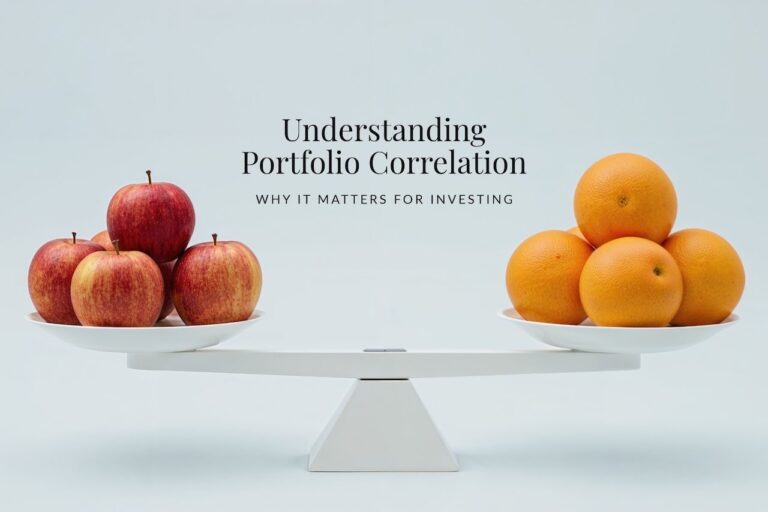
Understanding Portfolio Correlation: How Diversification Works Beneath the Surface
Diversification is one of the most frequently discussed concepts in investing, but understanding why it works requires a look at portfolio correlation. Simply put, correlation measures how different investments move in relation to one another. Recognizing these relationships can help investors better understand how risk and returns interact within a portfolio.
Whether you’re planning for retirement or refining your long-term strategy, understanding portfolio correlation can help you make more informed decisions about how your assets work together.
What Is Portfolio Correlation?
In investing, correlation describes how two assets move relative to each other. A correlation of +1 means the assets tend to move in the same direction, while a correlation of –1 means they typically move in opposite directions. A correlation near 0 suggests little relationship between their price movements.
For example, when stocks and bonds move in opposite directions, they have low or negative correlation—helping balance a portfolio during changing market conditions. On the other hand, if two investments rise and fall together, their positive correlation means they offer less diversification benefit.
Understanding these dynamics helps investors see how blending different asset types can help manage risk across a full market cycle.
The Role of Correlation in Diversification
Diversification aims to reduce the impact of volatility by spreading investments across asset classes, sectors, and geographies. Correlation plays a central role in determining how effective that diversification may be.
When portfolio components have low correlation, a downturn in one area may be partially offset by stability or growth in another. For example, when equity markets experience turbulence, bonds or alternative assets might perform differently.
It’s important to note that diversification does not eliminate risk; it simply helps distribute it. Market conditions, interest rates, and global events can all influence how assets behave relative to each other over time.
Why Correlation Changes Over Time
Correlation is not static. The relationships between asset classes can shift due to changes in the economy, investor sentiment, or policy decisions.
During periods of economic uncertainty, asset classes that normally move independently may start to behave more similarly. This temporary alignment can reduce diversification benefits. Conversely, in more stable periods, those correlations may loosen again, restoring balance across investments.
Because these relationships evolve, regular portfolio reviews can help investors stay aware of how their holdings interact and whether adjustments are needed to maintain desired levels of diversification.
Practical Examples of Correlation in Action
Consider an investor holding a mix of U.S. large-cap stocks, international equities, and bonds. Historically, these asset classes have displayed varying correlations: sometimes strengthening diversification, other times overlapping more closely.
- Stocks and Bonds: Typically have low or moderate correlation, meaning they often respond differently to changes in interest rates or economic growth.
- S. and International Stocks: Usually show moderate positive correlation, meaning global markets can move together, but differences in regional economies can still create balance.
- Commodities or Alternatives: May provide additional diversification benefits, as their performance drivers can differ from traditional equity and bond markets.
These examples highlight that understanding correlation is less about predicting returns and more about managing relationships among investments.
How to Think About Correlation in Your Portfolio
For individual investors, correlation is a tool for evaluating how different parts of a portfolio interact, not a signal for short-term changes.
A diversified portfolio may include assets with varying levels of correlation to help reduce the impact of market swings. However, diversification should always align with your personal goals, time horizon, and comfort with risk.
Using correlation as part of a broader strategy can help create balance, allowing your portfolio to adapt across different economic environments.
Understanding Portfolio Correlation: Final Thoughts
Correlation is one of the quiet forces behind effective diversification. By understanding how assets move relative to one another, you can take a more informed approach to risk management and long-term planning.
Over time, maintaining awareness of changing correlations and regularly reviewing your portfolio can help support a strategy designed to navigate a range of market conditions—without relying on short-term predictions or trends.
Illuminated Advisors is the original creator of the content shared herein. I have been granted a license in perpetuity to publish this article on my website’s blog and share its contents on social media platforms. I have no right to distribute the articles, or any other content provided to me, or my Firm, by Illuminated Advisors in a printed or otherwise non-digital format. I am not permitted to use the content provided to me or my firm by Illuminated Advisors in videos, audio publications, or in books of any kind.