Understanding the Difference Between Risk Tolerance, Risk Capacity, and Financial Goals
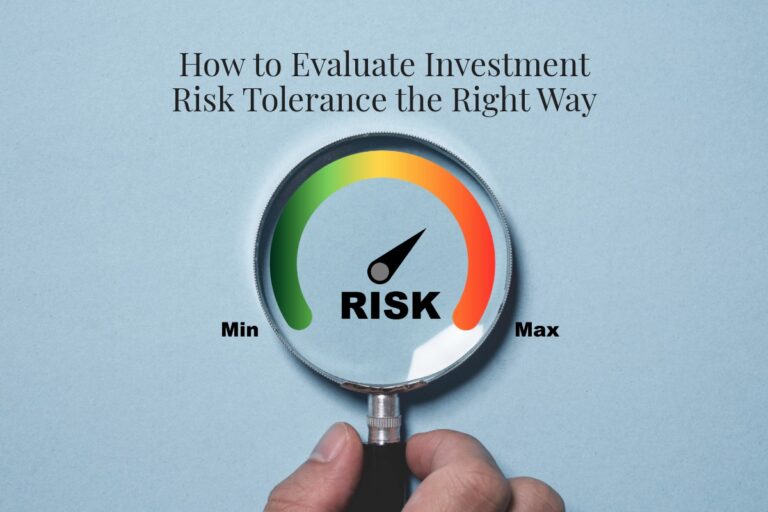
One of the most common questions investors face is how much risk they should take on with their investments. While many people focus on market performance or investment returns, understanding personal investment risk tolerance is often a foundational step in developing an investment strategy.
Investment risk tolerance influences how comfortable an individual feels with market fluctuations and uncertainty. However, evaluating risk tolerance involves more than answering a few questions on a questionnaire. It requires understanding how emotions, financial circumstances, and long-term goals work together.
What Is Risk Tolerance?
Risk tolerance refers to an individual’s willingness to accept fluctuations in the value of their investments.
Every investment involves some degree of uncertainty. Market values rise and fall over time, and different asset classes can experience varying levels of volatility.
Some investors are comfortable with significant market swings if they believe their long-term goals remain intact. Others prefer a more stable experience, even if it means accepting lower growth potential.
Neither approach is inherently right or wrong. The goal is understanding what aligns with your personal comfort level.
Risk Tolerance vs. Risk Capacity
One of the most common misconceptions is that investment risk tolerance and risk capacity are the same thing.
Risk tolerance focuses on emotions and behavior.
Questions related to risk tolerance might include:
- How would you react during a market decline?
- Would temporary losses cause significant concern?
- How comfortable are you with investment volatility?
Risk capacity, on the other hand, refers to your financial ability to withstand risk.
Factors that may influence risk capacity include:
- Age
- Time horizon
- Income stability
- Savings level
- Retirement timeline
- Financial obligations
An investor may have a high willingness to take risk but a limited capacity to absorb losses. The opposite can also be true.
Both factors are important when developing an investment strategy.
Why Emotions Matter
Investment decisions are not always purely logical.
Market volatility can trigger emotional reactions that influence behavior. During periods of uncertainty, investors may feel tempted to make changes based on fear, frustration, or short-term market headlines.
Understanding how you have reacted to market events in the past can provide valuable insight into your true risk tolerance.
Questions to consider include:
- How did I respond during previous market downturns?
- Did I feel compelled to make significant changes?
- Was I comfortable staying focused on long-term goals?
These reflections can reveal patterns that may not appear in a standard risk questionnaire.
The Role of Time Horizon
Time horizon is another important consideration.
Generally speaking, individuals with longer time horizons may have more flexibility to withstand market fluctuations because they have additional time for investments to recover from downturns.
For example:
- Someone saving for retirement 25 years from now may approach risk differently than someone planning to retire within the next few years.
- A long-term objective may support a different allocation than a short-term financial goal.
Time horizon should be evaluated alongside risk tolerance and risk capacity rather than in isolation.
Understanding Investment Objectives
Risk evaluation should always connect back to financial goals.
Different objectives may require different approaches.
Examples include:
- Retirement planning
- Education savings
- Major purchases
- Legacy planning
- Income generation
Clarifying the purpose of an investment portfolio can help determine whether the level of risk being assumed aligns with the intended outcome.
Avoiding Common Mistakes
When evaluating risk tolerance, several common mistakes can occur.
These include:
- Assuming past investment performance predicts future results
- Overestimating comfort with volatility during strong markets
- Focusing solely on returns without considering risk
- Making investment decisions based on recent headlines
A thoughtful assessment considers both opportunities and potential challenges.
Why Risk Tolerance Should Be Reviewed Regularly
Risk tolerance is not necessarily fixed.
Life events and changing circumstances can influence how investors view risk over time.
Examples may include:
- Marriage or divorce
- Career changes
- Retirement
- Inheritance
- Changes in health
- New financial responsibilities
Regular reviews can help ensure that investment strategies continue to align with both financial goals and personal preferences.
How to Evaluate Investment Risk Tolerance the Right Way: Final Thoughts
Understanding investment risk tolerance involves more than completing a questionnaire. It requires evaluating emotions, financial circumstances, time horizon, and long-term objectives.
By considering both investment risk tolerance and risk capacity, investors can develop a more complete picture of how risk fits into their financial plan.
A thoughtful assessment can help create an investment strategy that aligns with personal goals while supporting informed decision-making through changing market environments.
Illuminated Advisors is the original creator of the content shared herein. I have been granted a license in perpetuity to publish this article on my website’s blog and share its contents on social media platforms. I have no right to distribute the articles, or any other content provided to me, or my Firm, by Illuminated Advisors in a printed or otherwise non-digital format. I am not permitted to use the content provided to me or my firm by Illuminated Advisors in videos, audio publications, or in books of any kind.